The Marriage of 4D Visualization and Virtual Reality: Transforming How We Experience Time and Space
The world of digital innovation is evolving at breakneck speed, and two of the most exciting developments—4D visualization and virtual reality (VR)—are joining forces to create new ways of experiencing, understanding, and interacting with our environment. This combination is pushing boundaries far beyond what was once imagined. No longer limited to static 3D models or passive VR experiences, the marriage of 4D visualization and VR brings the vital element of time into immersive, interactive environments. This powerful synergy is unlocking new possibilities in fields as diverse as education, medicine, real estate, and entertainment, fundamentally changing how we perceive and engage with the world.
What is 4D Visualization and How Does it Integrate with Virtual Reality?
To appreciate the potential of this technological partnership, it’s important to understand what each component brings to the table. 4D visualization extends beyond the traditional three dimensions (length, width, height) by adding the crucial fourth dimension: time. This means that objects or environments are not only represented spatially but also dynamically, showing how they evolve or change over time.
.png)
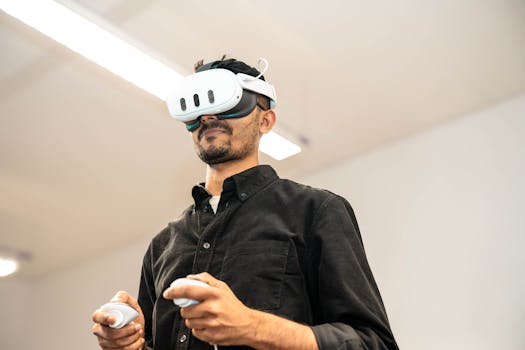
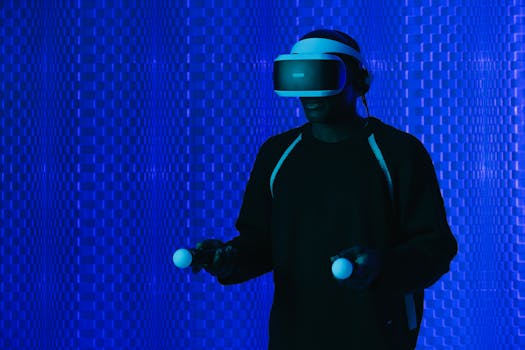
Virtual reality, meanwhile, is an immersive technology that uses headsets and motion tracking to transport users into simulated environments. When 4D visualization is integrated into VR, users can experience not only realistic, interactive 3D spaces but also witness, manipulate, or analyze how these environments change across time—something impossible with standard VR or 3D visualization alone.
According to a 2023 report by Statista, the global VR market is expected to reach $44.7 billion by 2024, while the broader visualization software industry is projected to grow to $13.1 billion by 2027. As these two technologies converge, their combined impact is set to grow exponentially.
Applications Transforming Industries
The confluence of 4D visualization and VR is having a transformative impact across multiple industries. Here are some of the most compelling examples:
1. Medical Training and Research: Imagine a medical student not only exploring a detailed 3D model of the human heart but also observing how it beats, changes during disease progression, or responds to surgery—all in real time. Researchers at Stanford University have developed VR platforms that integrate 4D imaging data, allowing medical professionals to explore patient-specific anatomy across time, improving diagnosis and surgical planning. 2. Disaster Response and Urban Planning: Emergency management teams can use VR environments populated with 4D data to simulate natural disasters or urban development projects over weeks, months, or even years. For instance, a city planner can step into a VR simulation to see how a proposed building will cast shadows throughout the year or how floodwaters might spread during a storm. 3. Engineering and Product Development: Automotive and aerospace engineers are leveraging 4D VR to test how prototypes withstand stress, temperature changes, or wear over their lifecycles. This approach not only reduces costs but accelerates innovation, as issues can be identified and addressed early in the virtual space. 4. Entertainment and Storytelling: Filmmakers and game developers are embracing 4D VR to create experiences where narratives unfold dynamically, reacting to user choices and evolving over time. In 2022, the video game industry generated over $184 billion globally, and experts predict 4D VR will be a key driver in the next wave of interactive storytelling.The Technological Building Blocks
Merging 4D visualization with VR is no simple feat. It requires the orchestration of several advanced technologies:
- High-Resolution 4D Data Capture: Techniques like 4D CT scans in medicine or time-lapse photogrammetry in construction generate the raw data needed for temporal visualization. - Real-Time Rendering Engines: Software such as Unreal Engine and Unity now support 4D data structures, allowing developers to create and manipulate environments that change over time. - Advanced VR Hardware: Devices like the Meta Quest 3 or Valve Index offer high refresh rates, accurate motion tracking, and haptic feedback, all crucial for maintaining immersion as users interact with evolving virtual worlds. - Artificial Intelligence: AI-driven algorithms help generate predictive models, animate changes, or even adapt scenarios in real time based on user interaction.This technological stack enables seamless, interactive experiences in which users are not just passive observers, but active participants in dynamic, time-sensitive environments.
Benefits and Challenges of 4D VR Integration
The fusion of 4D visualization and VR brings several significant benefits:
- Deeper Understanding: Users can see and interact with processes as they happen, rather than viewing static snapshots. For example, engineers can watch stress fractures develop in real time, or scientists can simulate climate change over decades. - Enhanced Decision-Making: In real estate, buyers can explore how sunlight will move through a property at different times of year. In medicine, doctors can simulate the progression of a disease to plan treatments. - Improved Engagement: Immersive, time-based experiences are more memorable and engaging, which is invaluable in education, marketing, and entertainment.However, there are notable challenges:
- Data Complexity: 4D datasets are massive, requiring significant storage and processing power. A single 4D medical scan can be hundreds of gigabytes in size. - Realism and Performance: Rendering dynamic environments at high fidelity, without lag or motion sickness, demands advanced hardware and optimization. - Accessibility: The cost and technical expertise required to develop and access 4D VR content can be prohibitive for smaller organizations or developing regions.Comparing Traditional 3D, 4D Visualization, and 4D VR
To clearly see the evolutionary leap that 4D VR represents, consider the following comparison:
| Feature | 3D Visualization | 4D Visualization | 4D VR |
|---|---|---|---|
| Spatial Dimensions | 3 (x, y, z) | 3 (x, y, z) | 3 (x, y, z) |
| Temporal Dimension | No | Yes (time) | Yes (time) |
| Immersion Level | Low (screen-based) | Low to Medium | High (VR headset) |
| User Interaction | Limited (rotate, zoom) | Play, scrub time | Real-time, immersive, dynamic |
| Example Application | 3D architectural model | Time-lapse construction sequence | Walk through a building as seasons change |
This table highlights how 4D VR goes beyond visualization to offer a participatory, time-aware experience.
Future Outlook: What’s Next for 4D Visualization and VR?
The marriage of 4D visualization and virtual reality is still in its early days, but the trajectory points toward even more impactful innovations. Experts predict several key developments over the next decade:
- Increased Accessibility: As hardware becomes more affordable and cloud-based rendering matures, 4D VR will become accessible to a broader audience, including schools, small businesses, and individuals. - Collaborative 4D VR: Multiple users will be able to enter the same dynamic environment, collaborating on projects or learning together in real time, regardless of their physical location. - Predictive and Generative Environments: With the help of AI, future 4D VR systems will not only visualize past or present changes but simulate possible futures, providing a powerful tool for planning, risk assessment, and creative exploration. - Integration with IoT and Big Data: Live data streams from sensors and connected devices will feed directly into 4D VR environments, allowing users to experience real-world changes as they happen.According to Accenture’s 2023 Technology Vision report, 67% of global executives believe that immersive technologies like 4D VR will be a major driving force in their industry by 2030. The fusion of these technologies is poised to become a cornerstone of digital transformation strategies worldwide.
Conclusion
The convergence of 4D visualization and virtual reality is more than a technological milestone; it’s a paradigm shift in how we interact with time, space, and information. By combining the dynamism of 4D data with the immersion of VR, this powerful partnership is enabling professionals, educators, and everyday users to explore, understand, and shape environments in unprecedented ways. As the technology matures and becomes more accessible, we can expect it to revolutionize countless aspects of our lives—from how we learn and work, to how we play and create. The future, quite literally, is unfolding before our eyes.