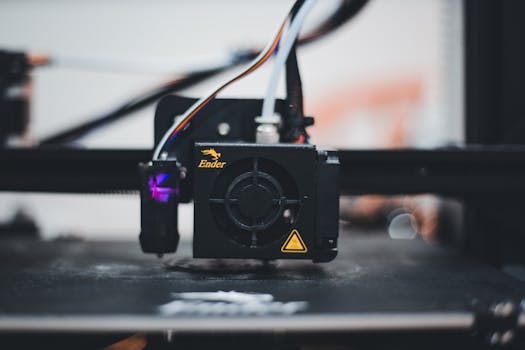
The future of software development in 3D visualization is poised to revolutionize the way we interact with digital environments across various industries. This technology, which transforms flat data into dynamic, three-dimensional spaces, is already making significant impacts beyond its traditional roots in gaming and entertainment.
Understanding 3D Visualization
At its core, 3D visualization involves creating graphical content through specialized 3D software. This technique allows designers and developers to craft digital representations that mimic real-world objects and environments. The ability to manipulate and explore these models virtually offers vast potential for industries ranging from architecture to medicine.
.png)
Broad Applications Across Industries
Architecture and Construction: Architects can visualize buildings in full scale using 3D models, allowing for immediate revisions and adaptations without the physical constraints. Clients can explore these designs in a virtual space, providing feedback that can be instantly incorporated, enhancing both customer satisfaction and operational efficiency.
Medical Field: In medicine, 3D visualization tools help create detailed anatomical models for educational and surgical preparation purposes. These models offer unprecedented clarity for studying complex structures and planning medical procedures, potentially increasing the precision and safety of surgeries.
Education: Educational institutions are harnessing 3D visualization to transform STEM education. By turning abstract concepts into interactive 3D models, students can gain a better understanding of complex subjects, potentially increasing engagement and retention rates.
Emerging Trends in 3D Visualization
The integration of Artificial Intelligence (AI) is streamlining the creation of 3D models, automating tasks like texturing and lighting, which traditionally require considerable time and expertise. This not only speeds up the development process but also makes it more accessible to newcomers.
Virtual Reality (VR) and Augmented Reality (AR) are taking 3D visualization to the next level by providing immersive experiences that dramatically enhance user engagement and understanding. In real estate, for example, VR allows potential buyers to tour properties virtually, offering a more intuitive understanding of the space than flat images or videos can provide.
Challenges and Considerations
Despite its potential, 3D visualization faces challenges, particularly in terms of cost and complexity. High-quality 3D rendering software and the hardware required to run it effectively can be costly, putting it out of reach for smaller firms or individual developers. Additionally, there is a significant learning curve associated with these advanced tools, requiring a blend of technical skill and creative vision.
The Future and Expansion of 3D Visualization
As technology continues to advance, the capabilities of 3D visualization tools grow, enabling more detailed and complex creations. The ongoing development of faster processors and more sophisticated graphics options promises to further enhance these capabilities.
The democratization of technology, facilitated by more affordable and user-friendly tools, will likely lead to broader adoption and innovation. As industries continue to realize the benefits of 3D visualization, we can expect increased investment and research, driving further advancements and potentially revolutionizing how we interact with digital content.
Conclusion
3D visualization is undoubtedly shaping the future of software development, offering transformative opportunities across a diverse range of fields. As this technology continues to evolve and expand, its impact on how we visualize, interact with, and understand digital information will only grow, marking an exciting new chapter in the intersection of technology and human experience.